
Feng Shui, an ancient Chinese metaphysical system designed to harmonise individuals with their surroundings, is based on the Taoist vision and understanding of nature, particularly the idea that the land is alive and filled with Chi, or energy.
This practice considers the placement and arrangement of the space to ensure the flow of energy is positive and beneficial. In today’s bustling world, the home office has become a mainstay for many professionals.
Applying Feng Shui principles to the workspace can optimise productivity, improve focus and invite prosperity.
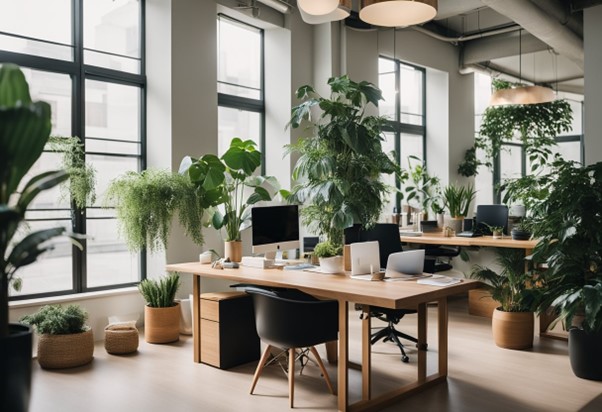
The basic tenets of Feng Shui involve the strategic arrangement of office furniture to enhance energy flow.
For example, positioning a desk so as to have a clear view of the office door without being in direct line with the doorway supports a sense of security and control. It is also crucial to incorporate natural elements like plants which can cleanse the air and introduce vibrant life force into the space. The choice and placement of plants follow specific Feng Shui guidelines to further encourage a balanced and energised home office environment.
Understanding how to balance the five elements – wood, fire, earth, metal, and water – is essential when applying Feng Shui principles. Each element affects the energy in the room differently and can be represented by various colours, shapes, and materials.
A well-thought-out office space considers these elements for their corresponding influence on work productivity and personal well-being. In addition to knowing what to include, awareness of what to avoid in Feng Shui is equally important, such as clutter, sharp objects pointed towards oneself, and poor lighting, all of which can disrupt the positive flow of energy.
Foundations of Feng Shui for the Home Office
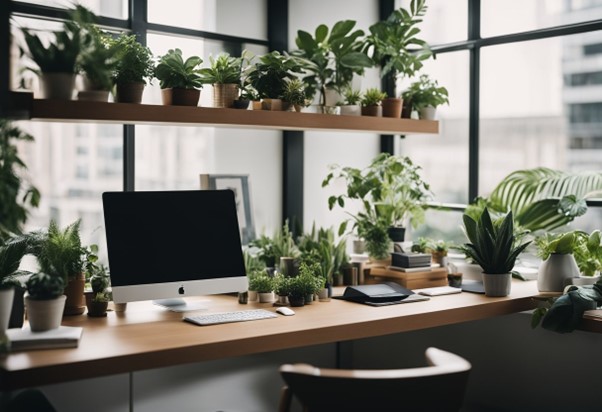
Incorporating feng shui into a home office aims to harmonise the space, promoting productivity and calm. This section explores core feng shui principles and how they guide office layout optimisation.
Understanding Feng Shui Principles
Feng shui is an ancient Chinese art that seeks to balance energies in any given space to ensure health and good fortune for those inhabiting it. In terms of a home office, feng shui focuses on enhancing the flow of chi, or life energy, which can be influenced by the arrangement and choice of various elements within the room.
The practice involves a careful balance of the five elements — wood, fire, earth, metal, and water — which are believed to interact with each other in either productive or destructive cycles.
For instance, a home office energised by feng shui principles might have:
- A wooden desk to symbolise growth and creativity
- A splash of red decor to introduce fire, which brings energy and motivation
- Earthen elements, such as terracotta pots, to foster stability
It is essential to steer clear of clutter and disorganisation, as they can obstruct the flow of chi and lead to decreased productivity and increased stress.
Equally, sharp angles, also known as ‘poison arrows’, can direct negative energy towards the individual, therefore positioning furniture in a way that avoids this direct alignment is advised.
Optimising Office Layout
Central to feng shui is the proper placement of furniture to optimise the flow of energy. The desk should be placed in a commanding position, typically with a clear view of the door but not in direct alignment with it.
This position fosters a sense of security and control. Moreover, one’s back should not be to the door, as this can be subconsciously unsettling.
The ideal feng shui home office layout consists of:
- Desk: In a commanding position, ideally facing the door
- Chair: High-backed for support and authority
- Computer: Positioned to reduce glare and strain
Incorporating plants and natural elements into the home office not only improves air quality but also brings in the wood element, which supports health and balance. Plants like bamboo or peace lilies are considered auspicious.
To balance the five elements, an individual might consider:
- Wood: Wooden furniture or plants
- Fire: Candles or red accessories
- Earth: Clay pots or earthenware
- Metal: Metal frames or sculptures
- Water: An aquarium or small fountain
A feng shui office layout also avoids placing one’s desk directly facing a wall, as this is seen as an obstacle to the flow of chi. Instead, allowing room for movement in front of the desk is advocated.
One should account for good quality lighting and air circulation, which are essential for maintaining a positive working environment. Indirect lighting is preferred over harsh fluorescent lights, and windows should be utilised for natural light and ventilation when possible.
Enhancing Your Office Space
A harmonious office layout and the inclusion of plants are essential for positive energy in a home office. Feng Shui principles can guide the arrangement of furniture and the selection of natural elements to create a balanced and efficient workspace.
Selecting Plants for Positive Energy
Plants are not only visually pleasing but they also bring a strong element of the Wood energy into an office space, promoting growth and vitality. According to Feng Shui, some of the best choices for an office include:
- Bamboo for flexibility and strength.
- Jade plant (Crassula ovata), symbolising prosperity.
- Peace lily (Spathiphyllum), which is associated with purifying the air.
- Areca palm (Dypsis lutescens), is known for its ability to remove toxins.
Plants should be healthy and well-maintained to ensure they contribute positively to the workspace’s energy.
Arranging Furniture for Harmony
The correct arrangement of furniture can influence the flow of chi (energy) and enhance productivity. Here are some Feng Shui guidelines for positioning essential furniture:
- Desk: Place the desk in a command position, which is diagonally opposite the door but not directly in line with it. This placement provides a sense of security.
- Chair: Use an ergonomic chair with a high back for support, symbolising stability.
- Shelving: Position shelves to the left or right of the desk, but never directly above it, as this can create a sensation of being overwhelmed.
Ideally, one should strive to balance the five elements (Wood, Fire, Earth, Metal, and Water) within the space, which can be symbolised through colours, shapes, or materials.
.
For instance, metal frames or accessories can introduce Metal energy, while a splash of red might represent the Fire element.
.
It’s important to avoid clutter and any sharp angles pointing directly at the workspace, as these can create negative energy.
.
Natural light is favourable, but if unavailable, one should opt for full-spectrum lighting that mimics daylight to encourage focus and clarity.
Frequently Asked Questions
When applying Feng Shui to a home office, the focus is on enhancing the flow of energy. This is believed to improve productivity and create a harmonious space.
How can I arrange my home office to adhere to Feng Shui principles for a better flow of energy?
To align the home office with Feng Shui, one should place the desk in a commanding position, which typically means facing the door but not in direct line with it. Clutter should be minimised to prevent stagnant chi (energy). Natural light and fresh air are encouraged, as well as including plant life.
What are the optimal Feng Shui positions for a desk in a small home office?
In a small space, the desk should face towards the door but not directly line up with it. If the room’s layout makes this difficult, a mirror can be used to reflect the entrance, giving a sense of control and foresight.
Can Feng Shui guidelines improve the shared workspace within my home, and if so, how?
Yes, in a shared workspace, Feng Shui can create a sense of balance and individual space. Each person should have a clearly defined area with their desk in a commanding position. Neutral colours can help maintain a calm and collective atmosphere.
In what ways does having a window in my home office affect its Feng Shui layout, and how should I account for it?
A window in a home office introduces natural light, which is beneficial in Feng Shui. The desk should be positioned to allow indirect natural light to illuminate the workspace without causing glare. Curtains or blinds may be used to soften the light and manage energy flow.
How might I integrate the five fundamental Feng Shui elements into my home office to enhance productivity?
To balance the five elements — wood, fire, earth, metal, and water — in a home office, one might include wooden furniture (wood), use red accents (fire), add earthy colours (earth), incorporate metal accessories (metal), and install a small water feature or imagery of water (water).
What strategies can be employed to effectively apply Feng Shui in a home office located within a living room space?
To apply Feng Shui in a combined living room and office space, one should use room dividers or furniture arrangements to clearly delineate the workspace. Ensure the desk is in a commanding position and use plants to maintain air quality and introduce a natural element.